Interview: Elmira Amdiy, The Wild Group



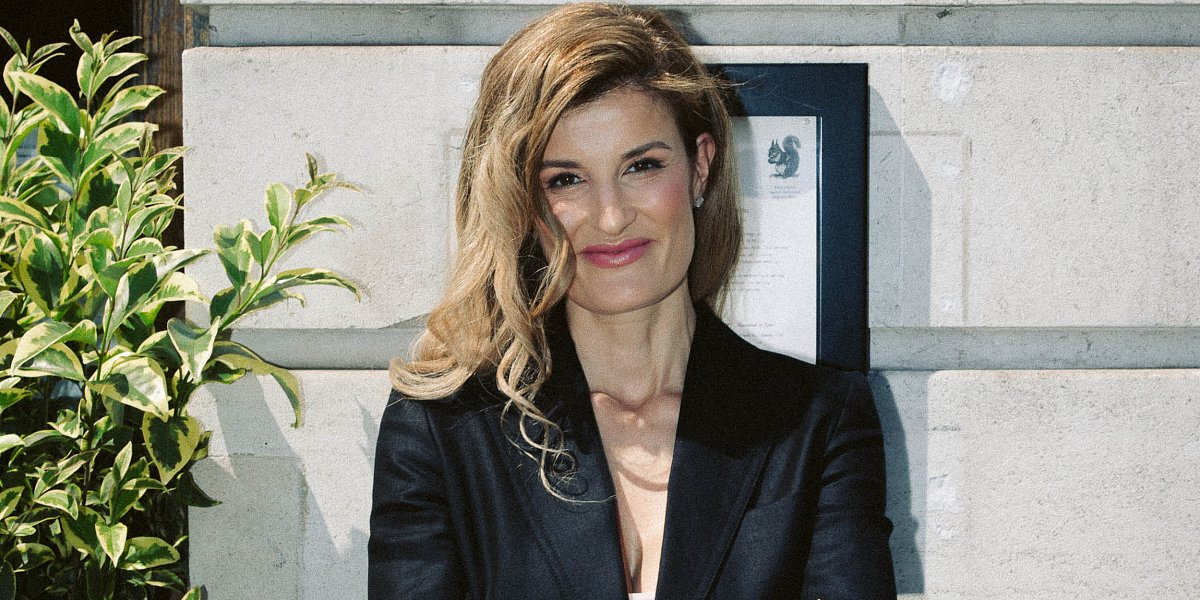
Following a career in investment banking, Elmira Amdiy grew The Wild Group from a single restaurant into an eight-figure hospitality business, comprising Wild Tavern, Wild Corner, Wild Notting Hill, Wild Izakaya, Chelsea Grill, Belvedere and Pinna Mayfair. Tristan O’Hana meets the founder to talk about the group, as well as the wider industry
DO: For those who aren’t aware, please tell us a little bit about The Wild Group.
EA: Wild Group is a premium London hospitality group built around restaurants with strong identities, great food, atmosphere and a real sense of warmth. The portfolio includes Wild Tavern, Wild Corner, Wild Notting Hill, Wild Izakaya, Chelsea Grill, Belvedere and Pinna Mayfair, with Krokodilos in Kensington currently being redeveloped into a new grill concept later this year.
Each restaurant has its own personality, but the philosophy behind the group is very consistent. For me, hospitality is about how people feel when they walk through the door and how they feel when they leave. Of course, the food has to be excellent, the interiors have to be right and the numbers have to work, but the heart of it is care, consistency and detail. A beautiful room means very little if the service feels cold or the experience is not properly managed from A to Z.
DO: So each restaurant is unique?
EA: We are not interested in building restaurants that only work for a launch moment or for social media content. That kind of attention disappears very quickly. What matters is whether people come back, whether they trust you with their celebrations, their business lunches, their family dinners and their private moments. That is what we try to build across the group.
Each restaurant has its own identity and reason for existing. Wild Izakaya focuses on authentic Japanese dining, Pinna Mayfair celebrates Sardinian cuisine, while Belvedere brings a taste of Italian provenance with renowned chef Lello Favuzzi. The concepts are different, but the philosophy behind them is the same. Exceptional hospitality sits at the centre of everything we do.
That said, exceptional hospitality is built on strong foundations, and great food is one of the most important. We are fortunate to work with some incredibly talented chefs across the group.
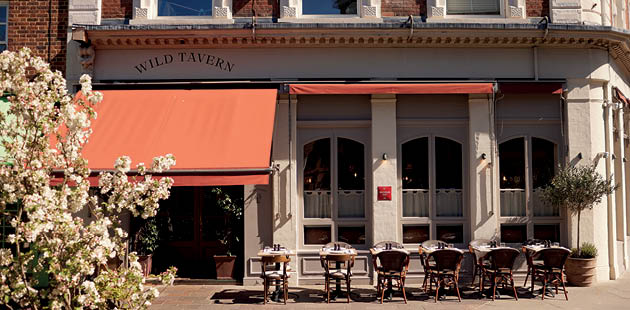
Wild Tavern, Chelsea
DO: In a nutshell, how did you find your way to leading a hospitality business?
EA: My background is investment banking, not traditional hospitality. I spent years in sales and trading at Barclays Capital, Nomura and UBS, so I came from a very numbers-led environment where you learn very quickly how to assess risk, performance and long-term value.
That said, hospitality was not completely new to me. Alongside my finance career, I had already been involved with Hostellerie La Farandole, a luxury hotel and waterfront restaurant business on the Côte d’Azur. So I understood the emotional side of hospitality as well as the commercial side.
My move into London restaurants came during the pandemic, through long-standing friendships and at a time when many people were very nervous about the sector. When we first became involved, there was one restaurant, Wild Tavern, and it was not performing as well as it could have financially, but there was so much potential.
DO: What made you want to get involved?
EA: What convinced us was the people behind it. George Bukhov-Weinstein and Ilya Demichev are exceptionally passionate about hospitality and I had known them for many years. They care deeply about food, service and atmosphere, and they pay attention to every aspect of the guest experience, from the chef and menu through to the interiors and the smallest details in the room. That level of attention to detail is quite rare, and I believed in them just as much as I believed in the long-term future of the sector.
DO: What patterns are you currently observing from consumers at this level of the industry?
EA: I think we’re seeing a much more selective luxury consumer than we did a few years ago. People haven’t stopped spending, particularly at the premium end of the market, but they are becoming far more intentional about where they spend their money.
Guests are looking for experiences that feel genuinely memorable rather than just expensive. They want quality, but they also want authenticity, atmosphere and a sense of occasion. People remember how they were treated, whether the food exceeded expectations, whether the room had energy and whether the experience felt worth talking about afterwards.
I’ve noticed guests are placing much more value on privacy now. Many spend their working lives constantly connected, travelling, attending events and being available, so when they go out for dinner, they’re often looking for the opposite.
Guests are also far more knowledgeable than they were 10 years ago. Many have travelled extensively, dined in exceptional restaurants across the world and developed a much deeper understanding of food, wine and service, so expectations are naturally higher as a result. They recognise quality very quickly, but they also recognise when something is lacking.
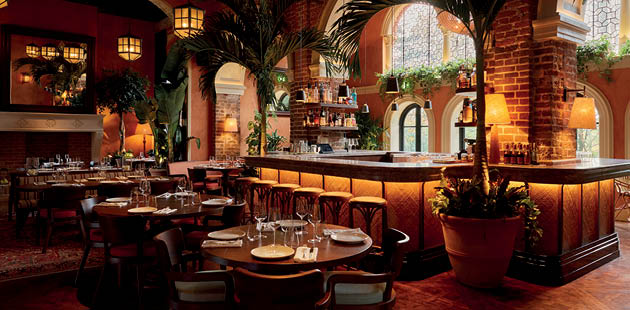
Belvedere, Holland Park
DO: Many of your guests are high-profile figures – should they be treated differently from the non-famous?
EA: They should be treated with discretion, of course, but not with better hospitality. Every guest should feel important. When high-profile people come to our restaurants, privacy is essential. Nobody wants to feel watched while they’re having dinner and we would never use a guest’s presence as a marketing opportunity. Trust takes a long time to earn and can be lost very quickly, so discretion is something we take incredibly seriously.
People come to us because they know they can relax, enjoy themselves and feel comfortable, regardless of who they are.
The same principle applies to everyone who walks through the door. Whether it’s a royal, a celebrity, a regular guest who dines with us every week, a family celebrating a birthday or a couple having a quiet dinner together, they should all receive the same level of care and attention.
DO: How is the business currently performing?
EA: The business is performing very well. When we first became involved in 2020, there was a single restaurant. Today, the group has seven venues, generates eight figures and employs more than 300 people in London.
Wild Tavern was the original restaurant I became involved with and it has since tripled its turnover. That’s a figure we are particularly proud of because it reflects much more than financial growth. It reflects years of investment in the team, the guest experience, the concept and the operational side of the business, and the commitment of the people who bring it to life every day.
Restaurants rarely succeed because of one big decision. More often, it’s the result of hundreds of small details being executed consistently over time, from the kitchen and front-of-house, through to management and operations.
DO: Why do you think there aren’t more female leaders in the sector?
EA: I think there are several reasons. Hospitality is a very demanding industry, but ownership and leadership at this level are also heavily influenced by access to capital, networks and opportunities. Historically, men have had greater access to all three.
There is also a practical funding issue. Female founders continue to receive a relatively small proportion of investment compared to their male counterparts. If it’s harder to access capital, it’s naturally harder to acquire sites, invest in growth and build larger hospitality groups.
What’s interesting is that women are certainly not absent from hospitality. Quite the opposite. Women are running restaurants, leading teams, managing operations and playing a significant role in the success of hospitality businesses every day. Where you tend to see fewer women is at ownership, investment and group level.
The encouraging thing is that I think we’re starting to see that change. More women are launching businesses, backing themselves and stepping into ownership positions. Visibility matters because once people can see examples of what’s possible, it becomes easier to imagine themselves doing the same.
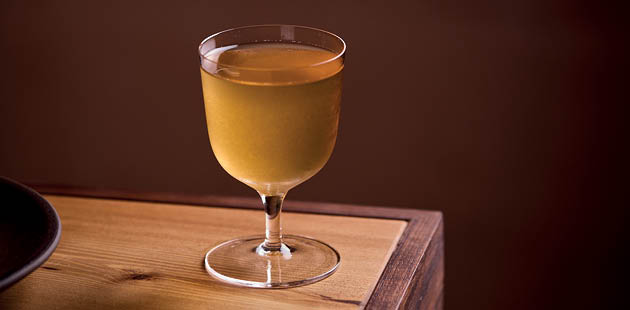
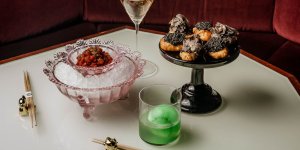
Wild Group drinks
DO: What would be your advice for women looking to reach similar heights?
EA: The first thing I would say is learn the commercial side of the business. Whatever industry you’re in, understanding the numbers gives you options. You can have great ideas, strong instincts and plenty of ambition, but if you don’t understand revenue, margins, cash flow and the drivers behind profitability, you’re always relying on somebody else to tell you what is and isn’t possible.
Second, don’t be afraid of responsibility. I think a lot of people wait until they feel completely ready before taking the next step, but in reality that moment rarely comes. Every major decision involves uncertainty. The key is to do the work, understand the risks, ask the right questions and then make a decision with conviction.
I’d also encourage women to think bigger than the role they’re currently in. It’s easy to become focused on doing your job well, but it’s equally important to understand how the wider business works, how decisions are made and where opportunities are created. The more visibility you have across a business, the better equipped you are to lead one.
DO: Tell us your thoughts about the ‘VAT’s The Problem’ campaign.
EA: I support the principle behind it because hospitality is one of the UK’s largest employers and one of its most important industries, yet it is often underestimated when people talk about economic growth.
What I find interesting is that hospitality is still often viewed primarily as a leisure sector rather than an economic one. In reality, restaurants support vast supply chains and employ huge numbers of people. When hospitality performs well, entire local economies benefit.
A VAT reduction would not solve every challenge facing the sector, but it would be one of the most meaningful interventions available. It would create more flexibility for businesses to invest in their teams, maintain quality, protect jobs and continue growing.
DO: Can premium hospitality brands be scaled without diluting the original quality?
EA: Yes, but I think far fewer businesses achieve it than people realise. One of the biggest mistakes in hospitality is confusing growth with success. Opening new sites is very exciting, but every additional restaurant introduces complexity because there are more people, more moving parts, more opportunities for standards to slip. If the focus becomes expansion for its own sake, quality is usually the first thing that suffers.
For me, successful scaling comes down to understanding what should never change and what can evolve. Service standards, food quality, team culture, operational discipline and attention to detail cannot be compromised. At the same time, every restaurant should have its own personality, its own energy and its own reason for existing. The moment everything starts feeling formulaic, you lose what made it special in the first place.
You also have to be honest about your capacity to grow. There is a temptation in hospitality to move quickly, particularly when opportunities arise, but growth only creates value if the foundations are already strong. Guests notice when standards slip. They notice when teams are overstretched, when details are missed and when consistency starts to disappear.
In my experience, the best hospitality groups are not necessarily the ones opening the most restaurants, but the ones that successfully protect their standards as they grow. That’s much harder to do, but it’s what creates long-term value.
DO: What does the future hold for Wild Group?
EA: The immediate priority is continuing to strengthen the portfolio and relaunching Krokodilos in Kensington as a new grill concept this summer. That project is a good example of how we think about growth. Sometimes the biggest opportunity isn’t opening something new, it’s recognising untapped potential and having the confidence to reposition it properly.
Beyond that, we’re always on the lookout for new opportunities. I have a long-standing interest in hotels through ownership of Hostellerie La Farandole in the south of France, and we are currently working on a big hotel project at the moment.
I think acquisition opportunities will continue to emerge. Hospitality has been through a challenging period and there are some excellent businesses with strong fundamentals that would benefit from the right backing, strategy or operational support. We will always look carefully at opportunities where we believe we can add genuine value.
As for a sale, that’s not something on the table. My focus is on continuing to build the group, investing in our people and developing the portfolio for the long term. We’ve built strong foundations, there are exciting opportunities ahead of us, and I believe we’re still at a relatively early stage of the journey.
You may also be interested in…